ADHD-Friendly Planning: 7 Tips That Help a Planner Stick
October 13, 2026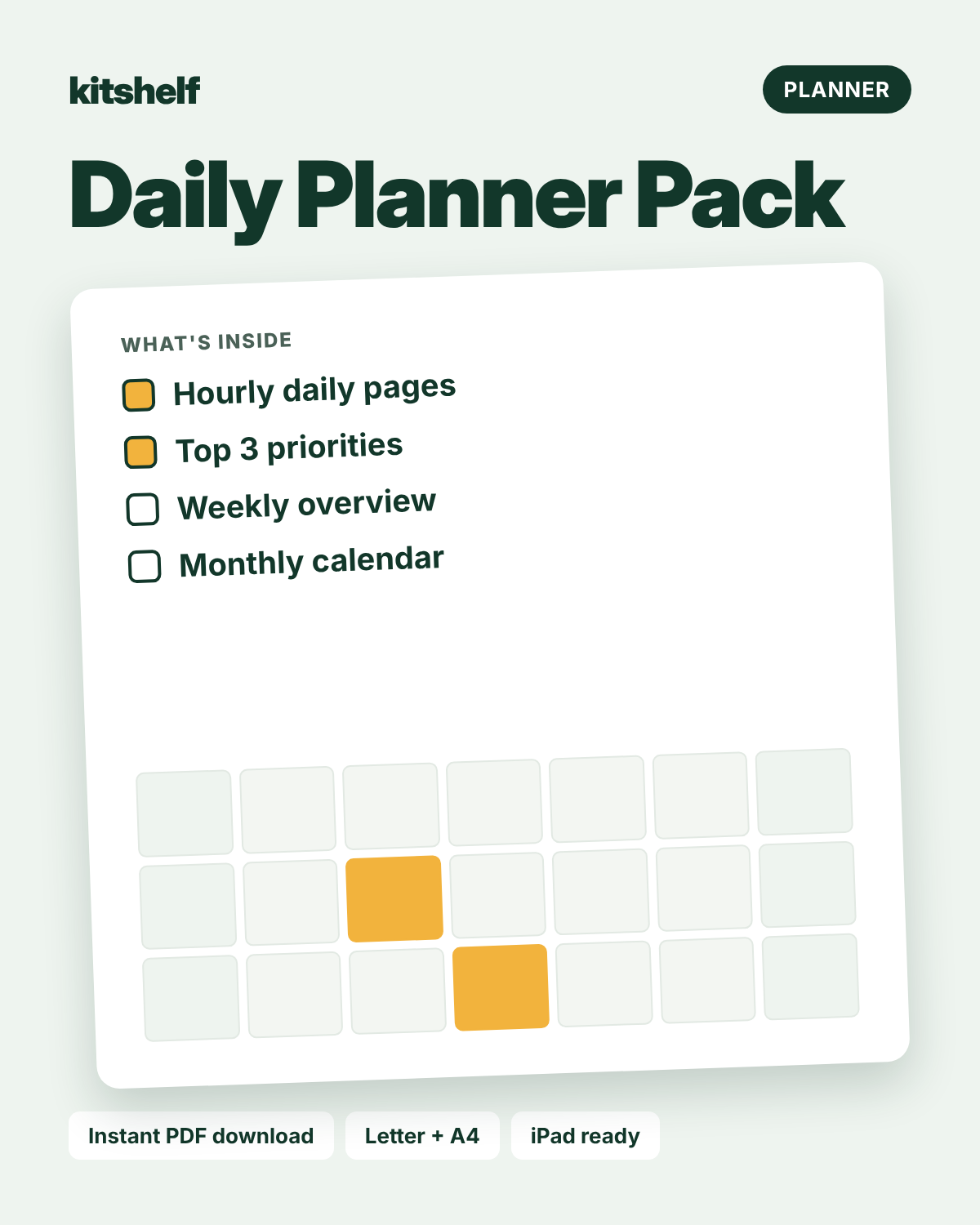
Many people with ADHD, and plenty without it, have a drawer of half-used planners. The problem usually isn't you. It's a planner with too many boxes, too much to remember and no easy way to start again after a bad week. These tips keep planning simple and visible.
1. Keep it where you can see it
Out of sight really can mean out of mind. Leave today's page open on your desk, stick it on the fridge or set it as the first thing you see in the morning.
2. Three priorities, not thirty
Write a short list of the three things that would make today a good day. Do those first. Everything else is a bonus, not a failure.
3. Break tasks into tiny first steps
"Do taxes" is hard to start. "Find last year's tax form" is not. Write the first physical action, and starting gets much easier.
4. Make time visible
Time blocks on paper and a timer for each block turn an abstract day into something you can see. When the timer rings, check in with the plan and move on.
5. Use undated pages
Dated planners leave blank pages behind after a missed week, and those gaps can make it harder to come back. Undated pages mean you just pick up from today.
6. Track streaks, not perfection
A habit tracker you color in each day gives quick, visible wins. If you miss a day, start a new streak. The history still counts.
7. Plan a reset, not a restart
Pick a weekly reset time, like Sunday afternoon, to clear the desk, move unfinished tasks and print a fresh page. A small weekly reset beats a big "fresh start" every few months.
Tools that help
- Our ADHD-friendly planner templates keep layouts simple, with big boxes and a top 3 priorities section.
- The free to-do list maker and habit tracker maker work right in your browser.
- The Bitshelf Planner app lets you bring yesterday's unfinished tasks over to today with one tap.
These are planning tips, not medical advice. If ADHD is affecting your daily life, a doctor or mental health professional can talk you through support and treatment options.
Keep reading: How to plan your day in 10 minutes · How to build habits that last